
The landscape of social media management has undergone a profound transformation, moving beyond simple content dissemination into a sophisticated, data-driven discipline. As of 2025, the utilization of specialized “ig tools” has transitioned from an optional advantage to a structural necessity for brands, creators, and agencies aiming to maintain visibility within an increasingly competitive algorithm. This evolution is characterized by a dual focus: the integration of generative Artificial intelligence (AI) to scale content production and the tightening of platform security measures to preserve user trust and authenticity. This report examines the current state of Instagram tools, the technical shifts in API infrastructure, the regulatory challenges of synthetic media, and the tactical solutions required to navigate account restrictions in the modern digital ecosystem.
Introduction: The Strategic Necessity of IG Tools
In the current social media environment, the Instagram algorithm rewards consistency, engagement velocity, and the utilization of diverse media formats. With the platform’s user base exceeding 2 billion monthly active users, manual management has become unsustainable for professional entities. “Ig tools” now encompass a wide array of functionalities, including automated scheduling, deep-dive analytics, AI-assisted content creation, and unified community management.
The primary driver behind the adoption of these tools is the shifting nature of organic reach. In 2025, organic visibility is no longer a guaranteed byproduct of posting; instead, it must be engineered through the precise timing of content, the strategic use of trending audio, and the rapid response to community interactions. Tools provide the infrastructure to batch-create content, visualize the aesthetic flow of a feed, and analyze performance data that extends far beyond the limited scope of Instagram’s native insights. As the platform moves toward an interest-based graph, the role of these tools in identifying niche trends and audience sentiment has become paramount.
Causes and Emerging Issues: The Crisis of Authenticity and Technical Debt
The proliferation of third-party tools has introduced significant challenges for the Meta ecosystem. The foremost issue is the conflict between efficiency-seeking automation and the platform’s core value of authentic human interaction. This friction has manifested in several ways, from the technical deprecation of legacy APIs to a widespread crackdown on non-compliant applications.
The 2025 Crackdown on Non-Compliant Tools
Instagram has intensified its scrutiny of third-party apps in 2025, primarily to combat the surge in spam, inauthentic behavior, and data security risks. A 2025 report noted a 30% increase in account suspensions linked to the use of non-compliant tools, specifically those that bypass official APIs to perform mass actions such as liking, following, or commenting. These “black hat” tools often promise rapid growth but ultimately trigger Instagram’s advanced AI detection algorithms, leading to shadowbans or permanent account loss.
The issue stems from the use of unauthorized automation that mimics bot-like behavior—rapid-fire actions that a human user could not realistically perform. This aggressive automation not only violates community guidelines but also compromises user data security, as many of these tools require direct password access rather than utilizing the secure OAuth protocols provided by official Meta Business Partners.
Technical Shifts and the Burden of API Migration
The technical foundation of IG tools is currently in a state of flux due to significant updates to the Instagram Graph API and Marketing API. Meta has initiated a transition toward a more unified and simplified object model, replacing legacy endpoints with consolidated alternatives such as “IG User,” “IG Media,” and “IG Comment”. While these changes aim to improve developer efficiency in the long term, they impose a significant short-term burden of technical debt. Developers must migrate their entire systems to these new endpoints by set deadlines—April 21, 2025, for the Graph API and January 21, 2026, for the Marketing API—to avoid service interruptions.
Furthermore, the implementation of “Views” as the primary consumption metric across all media types (Reels, Live, Photos, and Stories) has forced a recalibration of analytics tools. This shift reflects a move away from “plays” and “replays” toward a more holistic measurement of attention, which tools must now incorporate into their reporting dashboards to provide accurate ROI assessments for marketers.
Security Vulnerabilities in AI-Driven Agents
The rise of autonomous AI agents has introduced new security vectors. In early 2026, high-level alerts were issued regarding “significant security risks” associated with the deployment of certain AI agents on social platforms. For instance, the leak of API tokens and user emails from platforms like “Moltbook” highlighted the dangers of integrating poorly secured AI tools. As AI becomes more deeply embedded in the social media workflow, the risk of data exfiltration and impersonation-for-profit scams has reached an “industrial scale”. Scammers are increasingly using widely available AI tools to create deepfake content, such as fake journalist endorsements or fraudulent investment schemes, which complicates the platform’s moderation efforts.
Latest Information and Industry Reports: The State of the Art in 2025-2026
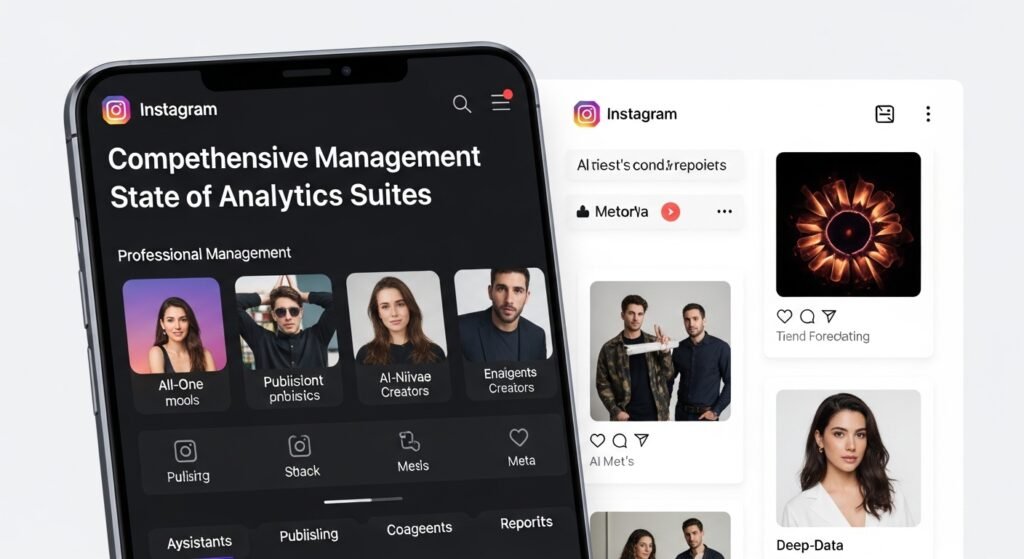
The market for Instagram tools is currently dominated by a few key categories: all-in-one management suites, AI-native content creators, and deep-data trend forecasting platforms.
Comprehensive Management and Analytics Suites
Professional management requires a centralized “control center” that integrates publishing, engagement, and reporting. The top-rated tools for 2025 are characterized by their compliance with Meta’s official API and their inclusion of advanced AI assistants.
| Tool Name | Core Feature Set | Primary Advantage | Target Segment |
| Brandwatch | Publishing, Listening, Sentiment Analysis | Enterprise-grade historical data | Global Brands |
| Later | Visual Planner, Linkin.bio, Influencer Market | Best-in-class visual scheduling | Creators / SMBs |
| Sprout Social | Shared Library, Advanced Reporting | Robust reporting and sentiment | Mid-market to Enterprise |
| Hootsuite | Cross-platform, AI Campaign Suggestions | Extensive multi-channel integration | Large Social Teams |
| Buffer | Simple Queue, AI Caption Assistant | Clean UI and beginner-friendly | Freelancers / Individuals |
| Iconosquare | Competitor Benchmarking, Deep Metrics | Analytics-first approach | Data-driven Marketers |
| Sendible | White-label Dashboards, Bulk Upload | Customized client portals | Marketing Agencies |
| Planoly | Aesthetic Templates, Shoppable Links | Focus on grid aesthetics and commerce | Visual Brands |
Brandwatch, formerly known for its Falcon suite, has emerged as a leader in “social listening,” allowing brands to go beyond simple mentions and analyze the emotion and intent behind audience conversations. Meanwhile, tools like Sprout Social have focused on “Optimal Send Times,” using predictive analytics to identify when an audience is most likely to engage, potentially increasing engagement rates by up to 32%.
The AI Video Revolution: Reels and the “Vibes” Standalone App
Generative AI has fundamentally altered the production cycle for Instagram Reels. In 2025, tools such as JoggAI allow creators to generate “digital twins”—AI avatars that mimic a user’s appearance and voice—to deliver scripted content without the need for traditional filming. This is part of a broader trend where AI handles the “tedious aspects of video creation,” such as subtitle generation, transition timing, and audio-to-visual synchronization.
Meta has responded to this trend by testing “Vibes,” a standalone AI-native video platform. Originally a feature within the Meta AI app, Vibes was spun off as a dedicated app in February 2026, currently testing in markets like Brazil and Mexico. Unlike Instagram Reels, which primarily features human-shot footage, the Vibes feed consists entirely of synthetically generated or “remixed” clips. Users can generate 15-second videos from text prompts and cross-post them directly to Instagram Reels or Facebook Stories, bridging the gap between purely synthetic content and the traditional social graph.
Global Regulation and Labeling of AI Content
The surge in synthetic content has triggered a wave of regulatory responses. In 2025 and early 2026, governments have moved to mandate clear, prominent labeling for all “synthetically generated information” (SGI). In India, for example, the Ministry of Electronics and Information Technology (MeitY) has directed social media platforms to ensure that AI-generated content carries embedded identifiers and visible disclosure tags. These rules define SGI as any audio, visual, or audio-visual content that is artificially created and appears authentic enough to be mistaken for genuine events or people.
Major platforms have integrated these requirements directly into their upload workflows. YouTube and Meta now require users to declare whether their content is “meaningfully altered” or synthetically generated. Failure to comply can lead to the removal of safe harbor protections for the platforms and penalties for the creators, marking a shift toward greater accountability in the use of AI tools.
Solutions, Troubleshooting, and Tactical Workflows
Navigating the complex Instagram environment requires not only the right tools but also a deep understanding of how to resolve technical restrictions and optimize organic growth.
Troubleshooting Account Restrictions: Action Blocks and Shadowbans
Account restrictions are often the result of “bot-like” behavior, such as exceeding engagement limits or using non-compliant third-party apps. Engagement limits in 2025 are strictly enforced to maintain platform integrity.
| Engagement Type | Estimated Hourly Limit | Estimated Daily Limit |
| Likes | 120 | 700 |
| Comments | 30 | 200 |
| Follows | 20 | 200 |
| Unfollows | 60 | 150 |
| Direct Messages | 5-7 (New contacts) | 50-70 (Total) |
When an account is hit with an “Action Blocked” notification, the immediate solution is to “Hit the Pause Button”. Users should stop all interactions for 24 to 72 hours to allow the algorithm to reset the account’s trust score. If the block persists, official and community-tested tips suggest:
- Switching Connections: Move from Wi-Fi to mobile data to bypass potential IP-based flags.
- Reinstalling the App: This clears cookies and cached data that might be associated with the block.
- Linking to Facebook: Connecting to a verified Facebook business account signals to Instagram’s AI that the user is a genuine entity rather than a bot.
- Revoking App Permissions: In the settings, users should remove access for any unauthorized third-party apps that do not use the official API.
Shadowbans—where content is hidden from non-followers—are more difficult to detect. Verification involves checking if a post appears under a niche hashtag for an account that does not follow the primary user. To lift a shadowban, users must cleanse their posts of “banned hashtags”—tags that have been flagged for violating community guidelines—and refrain from all automated activity for a minimum of 48 hours.
Tactical Workflow for Trend Forecasting and Competitive Benchmarking
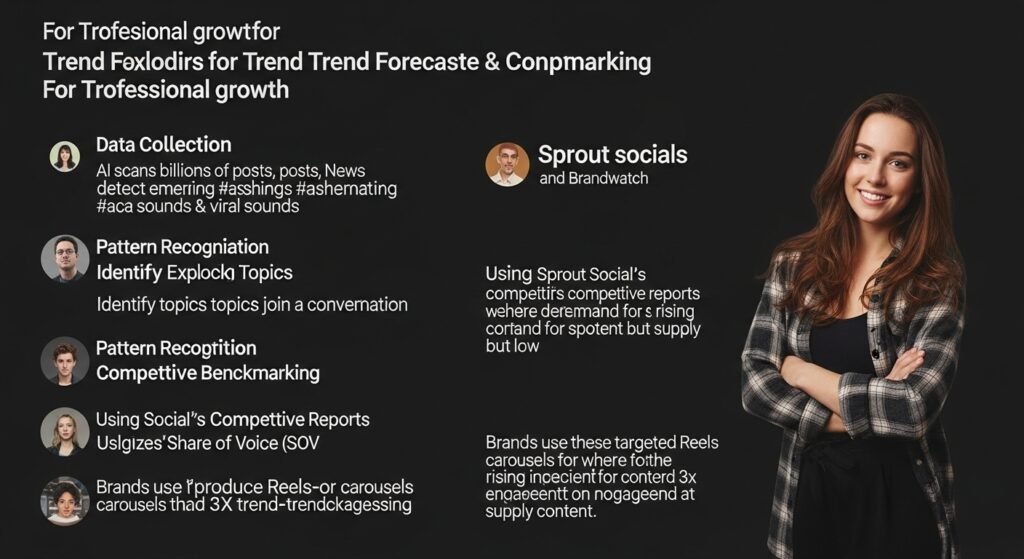
For professional growth, tools like Exploding Topics and Brandwatch are used to gain a first-mover advantage on viral trends. A typical 2026 workflow for trend identification includes:
- Data Collection: AI scans billions of posts, blogs, and news sites to detect emerging hashtags and viral sounds.
- Pattern Recognition: Tools like Exploding Topics identify topics before they peak, allowing brands to join a conversation while competition is still low.
- Competitive Benchmarking: Using Sprout Social’s competitive reports, brands analyze a competitor’s “Share of Voice” (SOV) and identify gaps where demand for specific content is rising but supply is low.
- Strategic Execution: Brands use these insights to produce targeted Reels or carousels that align with the identified trend, often seeing a 3x increase in engagement compared to non-trend-aligned content.
Building a Compliant Tool Stack
To maximize efficiency without risking account safety, an “ideal” 2025 tool stack consists of:
- One Scheduler: A tool like Later or SchedPilot for batch-creating and auto-publishing Stories and Reels.
- One Design App: Canva or Adobe Express for high-quality visuals and templates.
- One Analytics Dashboard: A deep-data tool like Iconosquare or Flick to track performance and manage hashtags.
- One Engagement Manager: A unified inbox solution like Agorapulse to handle high volumes of DMs and comments.
Conclusions and Strategic Outlook
The era of manual Instagram management has concluded, replaced by a complex ecosystem of “ig tools” that leverage AI to scale creativity and data to drive engagement. However, this power comes with the responsibility of compliance. The 2025 crackdown on non-compliant apps and the 2026 API migration deadlines highlight the necessity of partnering with official, secure platforms.
The future of the platform lies in the “Vibes” model of synthetic media, where content creation shifts from creator-led to AI-assisted formats. For marketers and creators, the key to success in 2026 will be the ability to blend these powerful automated tools with authentic human storytelling. While AI can predict trends and generate visuals, it cannot replace the genuine relationships and community trust that form the bedrock of sustainable social media growth. Organizations that prioritize official API integrations, adhere to global labeling regulations, and maintain a rigorous focus on organic interaction will be best positioned to lead in the evolving digital landscape.