
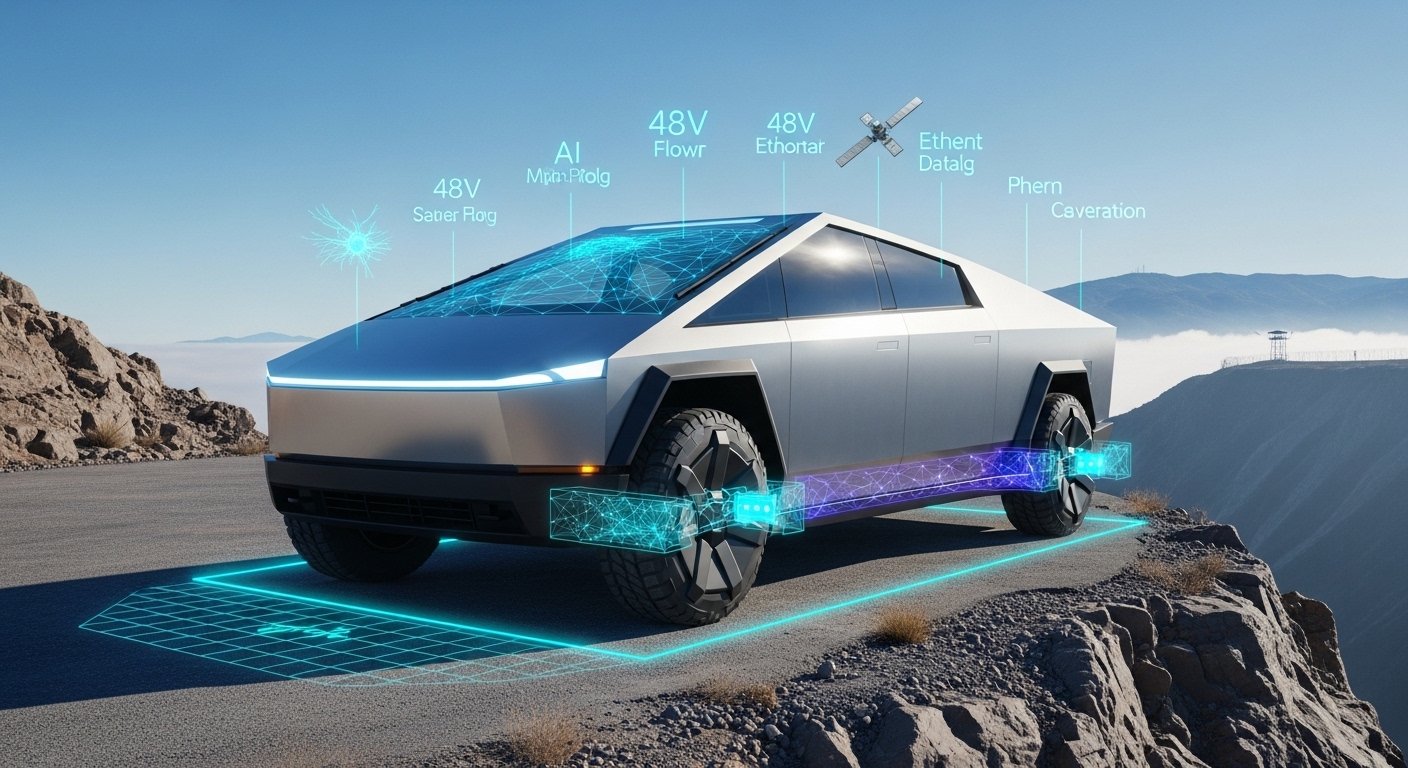
The landscape of modern national security is undergoing a fundamental transformation as the boundaries between commercial technological innovation and military requirement continue to dissolve. This shift is most visibly manifested in the increasing intersection of the United States Department of Defense (DoD), the broader Silicon Valley ecosystem, and the specific emergence of the Tesla Cybertruck as a platform of strategic interest. Once viewed primarily as a controversial consumer vehicle, the Cybertruck has transitioned into a focal point for military testing, procurement debate, and geopolitical maneuvering. This evolution reflects a broader trend where national security and commercial innovation are becoming more connected than ever before, with the Pentagon increasingly shifting toward the high-tech industry to provide the essential tools of modern warfare—ranging from agentic AI and heavy-lift rockets to advanced electric vehicle (EV) architectures. Over the past decade, government spending on private tech firms has reached a critical mass, now accounting for over $445 billion of the roughly $755 billion in total federal contract spending, signaling that Silicon Valley has effectively become the new backbone of American defense.
The integration of the Tesla Cybertruck into the military’s testing regime—specifically the Air Force’s acquisition of units for live-fire exercises at the White Sands Missile Range—highlights a departure from traditional procurement cycles. Military planners now recognize that the “sclerotic and dysfunctional” acquisitions process of the past cannot keep pace with the rapid iteration cycles of commercial firms. Consequently, the Pentagon is moving toward a “Musk-style” approach to defense reform, defined by speed, aggressive technological integration, and a willingness to test hardware to the point of failure to gather actionable data. This report provides an exhaustive analysis of the tactical, technical, and geopolitical dimensions of this convergence, examining the causes of this shift, the latest operational reports from testing facilities and global conflict zones, and the proposed solutions for a resilient, electrified, and connected future force.
Strategic Context and the Drivers of Electrification
The primary catalyst for the military’s interest in electric vehicle technology, and specifically the Cybertruck platform, is the urgent need to reduce the logistical burden associated with traditional fossil fuel supply chains. The Marine Operating Concept has long identified “iron mountains of supply and lakes of liquid fuel” as lucrative targets for 21st-century adversaries equipped with long-range precision-guided munitions. In modern high-intensity conflict, the “tether of fuel” represents a significant vulnerability, as the commitment of a Marine Expeditionary Brigade (MEB) to supply fuel can consume nearly the entirety of its assault support detachment. Electric vehicle technology, characterized by ongoing improvements in battery energy density, electric motors, and super-capacitors, presents a viable solution to the problem of fuel consumption, potentially allowing forces to go farther and faster with a reduced logistical signature.
The adoption of electric platforms is also driven by tactical advantages such as acoustic and thermal stealth. Unlike internal combustion engines, electric powertrains enable near-silent movement, which is essential for reconnaissance and clandestine operations. For instance, the Cybertruck operates at approximately 68 decibels at highway speeds, a feature that minimizes detection risks during tactical maneuvers. Furthermore, the lack of an exhaust system significantly reduces the thermal signature of the vehicle fleet, making it difficult for enemy unmanned reconnaissance aircraft to find concentrated units in contested environments. This shift toward electrification is supported by a growing market for military vehicle electrification (MVE), where major contractors like Oshkosh Defense, GM Defense, and General Dynamics Land Systems are competing to provide hybrid and fully electric platforms that align with the military’s climate and modernization objectives.
| Strategic Driver | Tactical/Logistical Implication | Technological Enabler |
| Logistical Burden | Reduction in fuel supply convoys (“Iron Mountains”) | High-density lithium-ion and zinc batteries |
| Stealth Requirements | Reduced acoustic and thermal signatures for reconnaissance | Near-silent electric motors and high-efficiency heat management |
| Operational Reach | Extended mission duration without frequent resupply | Bidirectional charging and mobile power export |
| Design Flexibility | Enhanced survivability through modular armoring | Low-profile skateboard chassis and 48V power systems |
The Pentagon’s shift toward Silicon Valley also reflects a fundamental change in military technology strategy. Investment in communication, computer, and intelligence systems has grown from $7.4 billion in 2017 to a projected $21 billion in 2025. Science and technology activities, which receive $18 billion, prioritize artificial intelligence, machine learning, and cyberwarfare capabilities. Defense Secretary Pete Hegseth has pledged to redirect funding toward these innovative weaponry and emerging technologies, signaling a departure from the “waterfall” development models favored by traditional defense firms, where specifications are rigidly defined years before a system is fielded. Instead, the military is looking to internalize operational philosophies like “The Algorithm”—Elon Musk’s five-step engineering process—which emphasizes questioning every requirement, deleting unnecessary steps, and accelerating the development cycle.
Technical and Tactical Analysis of the Cybertruck Platform
The Tesla Cybertruck is not merely a civilian pickup truck; its engineering represents a radical departure from conventional automotive design, offering features that have direct military applications. The vehicle’s 48V electrical architecture and Ethernet-based communication ring are of particular interest to defense analysts, as they provide a high-power, low-weight digital backbone that is uniquely suited for modern, sensor-heavy warfighting.
The 48V Architecture and Ethernet Digital Backbone
The transition from a standard 12V power system to a 48V architecture is one of the most significant technological breakthroughs in the Cybertruck. For the past 60 years, vehicle power demand has steadily increased, forcing traditional wiring harnesses to carry currents exceeding 200 A, which increases vehicle weight and cost. By shifting to 48V, Tesla has reduced the required current to one-quarter for the same power level. Because power loss in a harness is defined as resistance times current squared ($P = I^2 R$), reducing the current to one-quarter reduces distribution power loss to one-sixteenth. This enabled Tesla to achieve a staggering 73% reduction in wiring weight and an 78% weight savings overall when paired with the vehicle’s Ethernet communication ring.
For military applications, this weight reduction is critical. Every kilogram saved in the electrical system is a kilogram that can be redirected toward ballistic protection or additional sensor payloads. Furthermore, the 48V system provides the necessary power for high-demand components like active suspension, electric power steering, and potential offensive systems like directed-energy weapons or remotely operated weapon stations (CROWS). The Ethernet communication ring replaces the heavy and complex traditional wiring harness with a high-speed, lightweight network that facilitates rapid data transfer. This “open architecture” approach allows for the easy integration of militarized components without requiring deep modifications to the vehicle’s structural wiring, drastically decreasing the time and investment needed to add new capabilities to the fleet.
Structural Durability and Material Science
The Cybertruck’s unpainted stainless steel exoskeleton, constructed from ultra-hard 30X cold-rolled martensitic steel, provides a baseline level of durability and impact resistance that is rare in the consumer market. Martensitic steel is not only tough and corrosion-resistant but has been shown to be bullet-resistant, capable of stopping subsonic pistol-caliber rounds like 9mm and.45 ACP without penetration. In military testing scenarios, this material has been found “not to receive the normal extent of damage expected upon major impact,” which is a primary reason the Air Force selected the brand for its precision munition training program.
While the factory exoskeleton provides protection against small arms, it is the platform’s ability to support supplemental armoring that enhances its combat suitability. Third-party defense contractors, such as Archimedes Defense and Unplugged Performance, have developed “STING” packages that include bolt-on external armor plating designed to withstand 7.62mm assault rifle rounds or even 14.5mm heavy machine gun rounds. These upgrades leverage the Cybertruck’s adaptive air suspension, which offers 12 inches of travel and 16 inches of ground clearance, to compensate for the additional weight of the armor while maintaining off-road proficiency.
| Technical Feature | Engineering Detail | Military Application |
| 48V Power System | 73% wiring weight reduction; 1/16th power loss | Power for electronic warfare, sensors, and CROWS |
| Ethernet Ring | High-speed, lightweight data multiplex | Plug-and-play integration for software-defined mission packages |
| Steer-by-Wire | Electronic input; no mechanical linkage | Seamless conversion to Unmanned Ground Vehicles (UGV) |
| Martensitic Steel | Ultra-hard 30X cold-rolled exoskeleton | Inherent bullet resistance and simplified up-armoring |
| Bidirectional Charging | 9.6 kW power output; 120V/240V outlets | Mobile power source for field hospitals and command nodes |
Unmanned Ground Vehicle (UGV) Potential
One of the most profound strategic implications of the Cybertruck platform is its potential for conversion into a militarized Unmanned Ground Vehicle (UGV). The vehicle is the first mass-produced truck to feature a full steer-by-wire system, meaning there are no mechanical linkages between the steering wheel and the front tires. This design allows for seamless unmanned integration, as digital commands from an autonomous navigation system can go directly to the steering motors without the need for mechanical actuators or bypasses. When combined with Tesla’s millions of hours of real-world driving data and AI hardware, the Cybertruck could be transformed into an “attritable” drone—a vehicle whose cost (roughly $100,000 to $150,000 per unit) is low enough that its loss in combat would not be a significant financial or operational blow.
Militarized Cybertruck UGVs could perform high-risk missions such as armed scouting, troop resupply, or casualty evacuation. The platform’s large battery allows it to sit “on station” for long periods as a remote security sentry without consuming fuel or making noise, a capability known as “silent watch”. Proposals for militarized variants include the integration of Javelin anti-tank missiles, loitering munition launchers, and tethered overwatch drones, all powered by the truck’s internal electrical systems.
Latest Reports: Testing, Procurement, and Controversy

The intersection of the Pentagon and Tesla has not been without significant public and political friction. Recent reports detail a series of procurement efforts and subsequent controversies that highlight the complexities of using high-profile commercial technology for national security.
The Air Force Precision Munition Program
In August 2025, the U.S. Air Force Material Command filed documents seeking to acquire two Tesla Cybertrucks for target vehicle training at the White Sands Missile Range. While most of the 33 requested target vehicles are standard sedans and SUVs, the Cybertruck was the only model requested by name. The Air Force justification document revealed that military planners anticipate adversaries may adopt similar high-durability vehicles in future combat scenarios, and training must reflect these “real-world situations”. The Cybertrucks will serve as targets for the Stand Off Precision Guided Munitions (SOPGM) program, testing weapons such as the AGM-114 Hellfire and the GBU-39/B Laser Small Diameter Bomb against the vehicle’s unique stainless steel body.
This testing is critical because traditional target vehicles, made of painted steel or aluminum, do not mimic the ballistic or impact characteristics of the Cybertruck. The Air Force’s market research determined that the vehicle’s “aggressively angular” design and unpainted exterior set it apart from any other vehicle currently available. While the Cybertrucks are destined for destruction, the data gathered regarding their resilience to missile impacts and their signature on imaging sensors will inform future engagement tactics against high-tech insurgent or unconventional forces.
| Targeted Munition | Program/Context | Agency |
| AGM-114 Hellfire | SOPGM Training | U.S. Air Force / SOCOM |
| AGM-176 Griffin | Precision Strike Testing | U.S. Air Force |
| GBU-39/B Laser SDB | Advanced Munition Validation | U.S. Air Force |
| GBU-69/B Small Glide Munition | Low-Collateral Damage Testing | U.S. Air Force |
The $400 Million Armored Tesla Controversy
A more contentious development emerged in early 2025 involving a proposed State Department contract for “Armored Teslas.” A procurement forecast document published in December 2024 suggested that the administration planned to spend $400 million on armored versions of Tesla vehicles, likely Cybertrucks, to transport diplomats. This discovery triggered a firestorm in Washington, as Senator Richard Blumenthal and the Permanent Subcommittee on Investigations (PSI) raised concerns about “glaring conflicts of interest” given Elon Musk’s role as the head of the Department of Government Efficiency (DOGE).
Reporting later revealed that the Biden administration had only approved $483,000 for preliminary research into prototyping light-duty EVs for the State Department fleet. The sudden jump to $400 million under the new administration, combined with the removal of “Tesla” from the procurement document after public reports surfaced, led to allegations that government records had been backdated to hide the origins of the proposal. Ultimately, the State Department placed the solicitation on hold, citing technical concerns that a Cybertruck would struggle to survive in a hostile environment due to the weight of the required armor and potential battery life issues.
Global Conflict and the “Technological Parasitism” of Starlink
The operational relevance of Tesla’s sibling company, SpaceX, has also become a focal point of recent military reports. In February 2026, Ukrainian officials reported a “disaster” for Russian command-and-control (C2) capabilities after SpaceX, in coordination with Kyiv, deactivated thousands of unauthorized Starlink terminals used by Russian forces. This “technological parasitism,” where Russian units procured terminals through third countries, had previously provided them with mobile, hard-to-disrupt communications. The deactivation of these terminals reportedly led to the collapse of assault operations in several sectors, as commanders lost access to real-time UAV feeds and encrypted tactical links.
The incident underscored the strategic importance of the “Starshield” program—the military version of Starlink—which is currently being integrated into U.S. Special Operations Command (USSOCOM) platforms like the AC-130J Ghostrider. Starshield offers high-bandwidth, low-latency data transfer (300-500 Mbps with 25ms latency) and is designed to be resilient in contested environments through the use of inter-satellite laser links. The synergy between the Cybertruck’s 48V power system and the Starshield terminals creates a potent mobile command node, though the “kill switch” capability demonstrated in Ukraine raises critical questions about the sovereignty of military communications when reliant on private commercial networks.
Critical Minerals and the 2026 Battery Strategy
The transition to an electrified military fleet is fundamentally constrained by the supply chain for critical minerals and battery components. As of 2024, the United States was 100% net-import reliant for 12 critical minerals and more than 50% reliant for an additional 29, with China controlling the vast majority of the processing and refining capacity. In January 2025, the Pentagon blacklisted Contemporary Amperex Technology Co. (CATL)—the world’s largest battery maker and a key supplier to Tesla—as a “Chinese Military Company,” complicating the sourcing of lithium iron phosphate (LFP) batteries for both commercial and defense applications.
To address these vulnerabilities, the Pentagon is finalizing a new battery strategy for release in early 2026, aimed at standardizing battery cells and modular architectures to ensure secure supply chains. This effort is bolstered by President Trump’s January 2026 Executive Order, “Adjusting Imports of Processed Critical Minerals,” which emphasizes international cooperation with allies to reduce dependence on China.
| Critical Mineral | 2024 Import Reliance | Key Sectors | National Security Role |
| Lithium | >50% | Energy/Transportation | Battery storage for EVs and UGVs |
| Cobalt | >50% | Energy | High-density battery cathodes |
| Nickel | >50% | Energy | Battery and alloy production |
| Gallium/Germanium | 100% | Communications | Fiber optics and satellite systems |
| Rare Earths (16) | 100% | Multiple | Permanent magnets for electric motors |
Significant federal investment is also being deployed to foster a domestic battery industrial base. “Project Vault,” a strategic reserve for critical minerals, was launched in February 2026 with $10 billion in financing from the Export-Import Bank. Additionally, the Department of Energy has provided massive loans to projects like Lithium Americas’ Thacker Pass ($2.3 billion) and Ioneer’s Rhyolite Ridge ($996 million) to accelerate the production of lithium carbonate within the United States. These efforts aim to bridge the “minerals-defense nexus,” ensuring that military readiness and technological superiority are not compromised by fragile upstream supply chains.
Operational Challenges: Causes and Issues
The integration of Big Tech platforms into the military presents a unique set of challenges that must be addressed before widespread adoption can occur. These issues range from the physical limitations of current EV technology to the ethical and cyber vulnerabilities of connected vehicles.
The “All-Electric Tank” Paradox
While light tactical vehicles like the Cybertruck are increasingly viable, the technology for larger all-electric armored vehicles, such as tanks, remains elusive. Lt. Gen. Ross Coffman of the Army Futures Command has stated that an all-electric tank would require a charging infrastructure so massive that the diesel generators needed to power it would consume more than 1,200 gallons of fuel, negating any logistical gains. For heavy platforms, hybrid technology—such as the Oshkosh ProPulse system—remains the “happy medium,” offering 20-30% fuel savings while maintaining the reliability of internal combustion.
Weight and Armoring Constraints
A primary issue for the State Department and the Pentagon is the weight of the armor required for diplomatic or high-threat environments. Fully armoring a vehicle can add over 1,000 pounds of weight, which significantly impacts the range and performance of electric vehicles. For the Cybertruck, whose 7,000-pound curb weight is already high, this additional mass could exceed the vehicle’s structural and suspension limits unless heavy modifications are made. Furthermore, lithium batteries are notoriously prone to fire when damaged or exposed to moisture; in a combat scenario, a battery fire from an IED blast would be catastrophic and difficult to extinguish.
Cybersecurity and Connected Vulnerabilities
The Cybertruck is a “software-defined vehicle,” which introduces a wide attack surface for cyber disruption. Connected technologies, including cameras, radar, and AI driver assist systems, could be weaponized for espionage or disruption. Cybersecurity experts warn that the connectivity between battery packs and the cloud could be compromised, allowing an adversary to disable a fleet remotely or exfiltrate sensitive location data. The Pentagon’s believed link between Chinese battery manufacturers and the CCP exacerbates these fears, as “intelligent” batteries could theoretically serve as tools of influence or sabotage within the American grid or military logistics network.
| Operational Challenge | Cause/Issue | Impact on Military Readiness |
| Charging Infrastructure | Lack of forward-deployed high-voltage chargers | Restricted range and mobility in combat |
| Battery Fire Risk | Lithium-ion thermal runaway from ballistic impact | Catastrophic vehicle loss and crew danger |
| Cyber Vulnerability | Remote monitoring and “kill switch” risks | Disruption of command and control (C2) |
| Weight Displacement | Armor mass reduces EV range and suspension life | Reduced mission duration and off-road capability |
Solutions and Tactical Recommendations
To overcome these obstacles and capitalize on the innovation offered by Silicon Valley, the Pentagon must adopt a series of standardized practices and technological solutions.
Standardizing the Battery Architecture
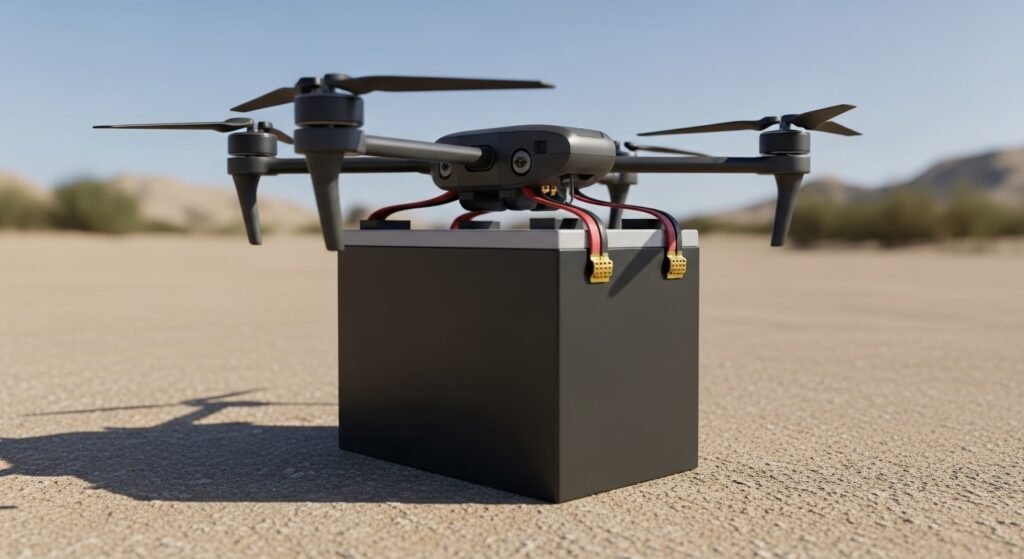
The release of the 2026 battery strategy should focus on standardizing cell materials and modular architectures. By using a “plug and play” battery design, the military can ensure that batteries are interchangeable across multiple platforms, from drones to light tactical trucks. Furthermore, investing in next-generation battery treatments—such as the acidic solution process developed by ARL to protect zinc electrodes—can create longer-lasting power sources that are more reliable for soldiers in the field.
Leveraging Hybrid-Electric as a Transition Path
Given the current limitations of pure battery-electric vehicles (BEVs) in heavy tactical roles, the military should prioritize hybrid-electric systems like the eJLTV and ProPulse. These systems allow for “silent drive” and “silent watch” capabilities while charging the battery during normal diesel operation, eliminating the need for a massive, vulnerable charging infrastructure in the near term. The Cybertruck can serve as a “niche role” platform for reconnaissance and small unmanned aviation where its low acoustic signature and rapid acceleration are most beneficial.
Enhancing Survivability with External Armor and Gensets
For light tactical use of the Cybertruck, third-party packages like the “STING APC” provide a blueprint for survivability. These packages utilize bolt-on, bolt-off external steel and ceramic armor, which avoids the complexities of internal armoring while protecting against heavy machine gun rounds. To solve the range problem, the integration of aviation-derived 800V gensets (generators) in the vehicle’s frunk can provide long-endurance capability, allowing the vehicle to remain operational for extended periods without external power.
Procurement and Bureaucratic Reform
The Pentagon must continue to embrace the procurement reforms championed by DOGE and the current administration. Implementing time limits on Pentagon milestones and moving toward fixed-price contracts for established tech can accelerate large system acquisitions. By adopting “The Algorithm,” the military can strip away the unnecessary regulations that have historically resulted in systems being obsolete by the time they reach the battlefield. The integration of commercial AI platforms like Grok into Pentagon systems for both classified and unclassified networks will be essential in transforming the military into an “AI-first warfighting force”.
Future Outlook and Strategic Synthesis
The convergence of the Pentagon, Big Tech, and platforms like the Tesla Cybertruck represents a fundamental shift in the American approach to national security. The era of the “legacy prime contractor” providing perfect but late systems is ending, replaced by a “Silicon Valley playbook” defined by speed, vertical integration, and iterative development. The Cybertruck serving as a missile target at White Sands is not merely a test of a truck; it is a test of a new technological paradigm where high-tech commercial equipment characterizes the core of the battle.
As we move toward 2030, several trends will define this relationship:
- The Proliferation of Attritable UGVs: The Cybertruck’s skateboard chassis and steer-by-wire architecture will likely lead to its widespread use as a base for unmanned scouting and combat wingman systems.
- Satellite-Integrated Warfare: Connectivity through Starshield and MILNET will become the central nervous system of the battlefield, with deactivation protocols serving as a decisive weapon against those who rely on “technological parasitism”.
- The Mineral Arms Race: The development of domestic strategic reserves like Project Vault and the success of the 2026 Battery Strategy will determine whether the U.S. can successfully transition to an electrified force without trading one form of energy dependence (oil) for another (Chinese minerals).
Conclusion
The strategic integration of the Tesla Cybertruck into the Pentagon’s operational framework marks a pivotal moment in military history. This analysis demonstrates that the Cybertruck is far more than a marketing gimmick or a controversial consumer vehicle; it is a sophisticated engineering platform that offers a 48V digital backbone, inherent structural durability, and a unique readiness for unmanned operations. While the State Department procurement controversies and the challenges of lithium-ion fire risks highlight the complexities of this transition, the underlying tactical advantages of electrification and high-speed connectivity are undeniable.
The Pentagon’s decision to destructive-test these vehicles at White Sands is a pragmatic recognition that high-tech civilian platforms will characterize future operating theaters. To maintain dominance, the Department of Defense must continue to bridge the gap between Silicon Valley’s innovation and the battlefield’s demands. By standardizing battery architectures, reforming procurement through the lens of government efficiency, and securing the critical mineral supply chain, the United States can ensure that its force remains—in the words of military researchers—”one car length ahead of the enemy”. The Cybertruck narrative is emblematic of a broader change where the speed of software development and the resilience of commercial hardware have become the new metrics of national security.