
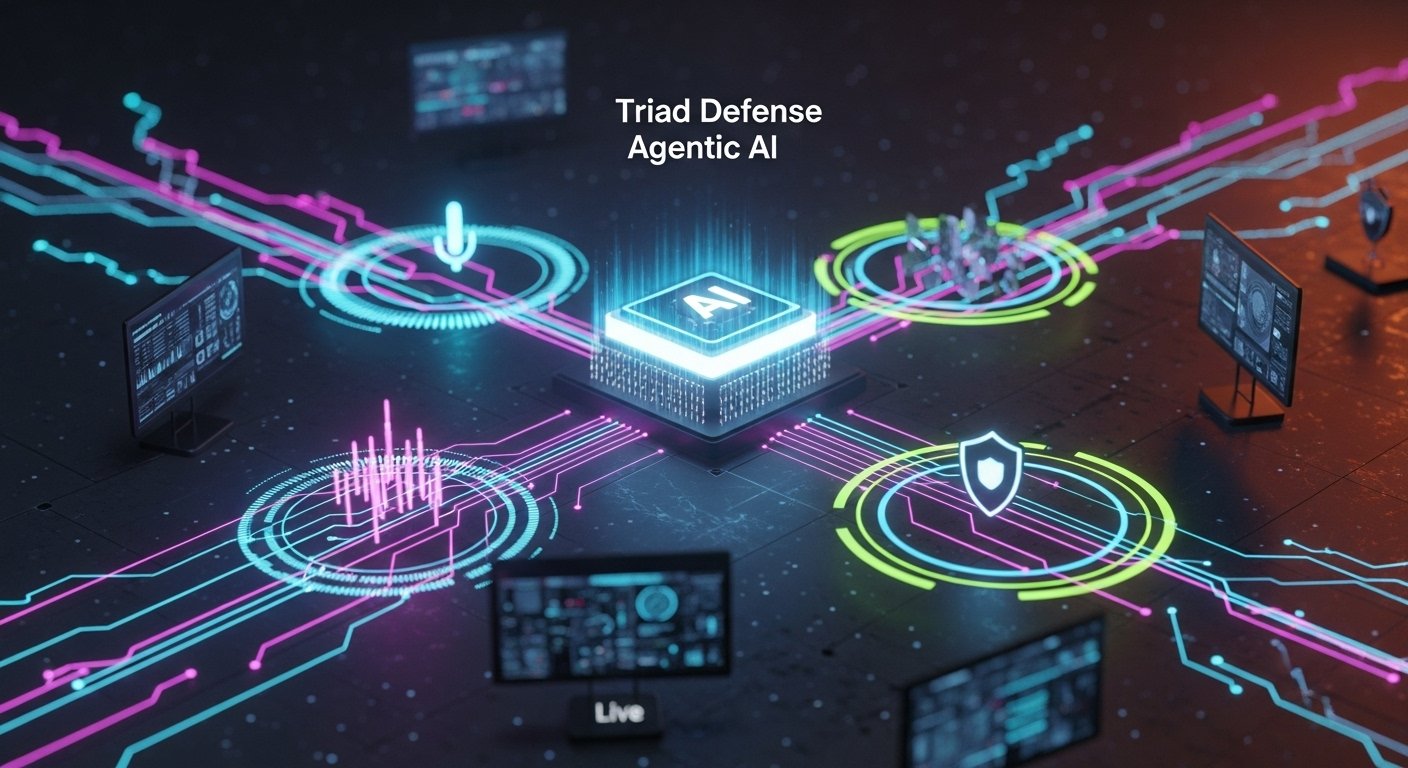
In 2026, cybersecurity is going through a major change. Artificial intelligence is no longer limited to creating content or giving advice. It is now moving into an operational phase known as Agentic AI.
Earlier AI models mainly supported humans. They helped write content, analyze data, or answer questions. Agentic AI goes further. It can think through problems, use external tools, remember past actions, and complete complex tasks across different systems without constant human supervision.
This shift has helped companies work faster and more efficiently. At the same time, it has made cyber threats far more dangerous. Attackers are now using the same technology to run large-scale, automated scams. These attacks target channels built for human communication, such as phone calls and video meetings.
To respond, a new security approach has emerged. Often called the Triad Defense, it combines:
- Agentic AI for decision-making
- Pindrop for voice liveness detection
- Anonybit for decentralized biometric protection
Agentic AI and the Growing Trust Problem
Agentic AI does not need step-by-step instructions. Instead, it is given a goal. The system then decides how to reach that goal by selecting APIs, querying databases, and updating platforms like CRM and ERP systems on its own.
This autonomy creates a serious security challenge. When an AI agent performs sensitive actions, traditional identity checks are no longer enough. Passwords, one-time codes, and security questions only prove what someone knows not who is actually acting.
The trust issue becomes worse because advanced fraud tools are now widely available. Criminals use the same AI technology to create systems that sound and behave like real people. These systems copy human speech patterns, pauses, and imperfections with high accuracy.
As a result, human judgment is no longer reliable. Contact-center agents and meeting participants can no longer trust their own ears. The integration of Pindrop and Anonybit helps close this gap by binding AI actions to a verified human identity.
Why Traditional Security Can’t Stop Agentic Fraud
Most security systems were built to stop humans or simple bots. They were never designed to defend against autonomous AI operating at machine speed.
The Limits of Rule-Based Security
Traditional defenses rely on fixed rules. These include blocked IP addresses, known phone numbers, or previously leaked passwords. Agentic AI easily bypasses such controls. When one path is blocked, it instantly tries another.
| Security Method | How It Works | Why It Fails |
|---|---|---|
| Static Rules | Blacklists and simple filters | AI quickly changes tactics |
| Passwords & KBA | Secrets and questions | Easily stolen or guessed |
| MFA Tokens | SMS codes or devices | Exposed to SIM swaps |
| Triad Defense | AI + voice + biometrics | Built for real-time threats |
The Risk of Centralized Biometrics
Many organizations avoid biometrics because of one major fear: centralized storage. Traditional systems keep biometric data in a single database. If that database is breached, attackers gain permanent identifiers.
Unlike passwords, biometric traits cannot be changed. This makes breaches extremely dangerous. Because of this risk, companies have continued using weaker credentials—even though stolen credentials are behind most data breaches today.
Social Engineering at AI Speed
Scammers have always used emotions like fear and urgency. Agentic AI allows them to do this at massive scale. AI systems can place thousands of calls at once, using deepfake voices that imitate executives or family members.
These voices are almost impossible to detect by ear. The pressure they create leads people to act quickly, resulting in major financial losses, especially through wire-transfer fraud.
What the Data Shows: 2025–2026
Industry reports confirm how serious the problem has become. Deepfake fraud is not increasing slowly it is exploding.
In 2024, deepfake attacks grew by more than 1,300%, rising from rare incidents to multiple attempts per day across major industries.
| Industry | Growth in Voice Attacks | Risk Outlook |
|---|---|---|
| Insurance | +475% | Rapid fraud expansion |
| Banking | +149% | High wire-fraud risk |
| Retail | +107% | 1 in 56 calls affected |
| Contact Centers | Above forecasts | $44.5B exposure |
This growth is driven by AI systems that generate realistic speech and background noise in real time, allowing them to pass older security checks.
The Deepfake Job Applicant Problem
A new and serious risk appeared in 2025: fake job candidates. Research shows that one out of every six remote applicants showed signs of AI-based fraud.
These candidates use deepfake video and audio during interviews. Some are linked to organized or state-sponsored groups. Once hired, they gain access to internal systems and sensitive data. This has turned hiring into a major security risk.
Securing AI with Identity-Bound Agents
To fight these threats, companies are linking AI systems to verified human identities. Anonybit’s work with SmartUp shows how decentralized biometrics can secure agent-driven commerce.
At the same time, Pindrop’s integration with platforms like Zoom and Microsoft Teams enables real-time deepfake detection during critical calls, such as executive approvals or high-value transactions.
How the Triad Defense Works
Pindrop: Detecting Real Human Voices
Pindrop focuses on determining whether a voice is live and human. It analyzes more than 1,300 audio signals to detect signs of synthetic or replayed audio.
- Real-time risk scoring
- Deepfake pattern detection
- Continuous monitoring during calls
Anonybit: Removing the Biometric Honeypot
Anonybit protects biometrics by splitting them into anonymous fragments and storing them across multiple locations.
- No central database
- No single point of failure
- Matching without exposing raw data
- Strong privacy and future-proof security
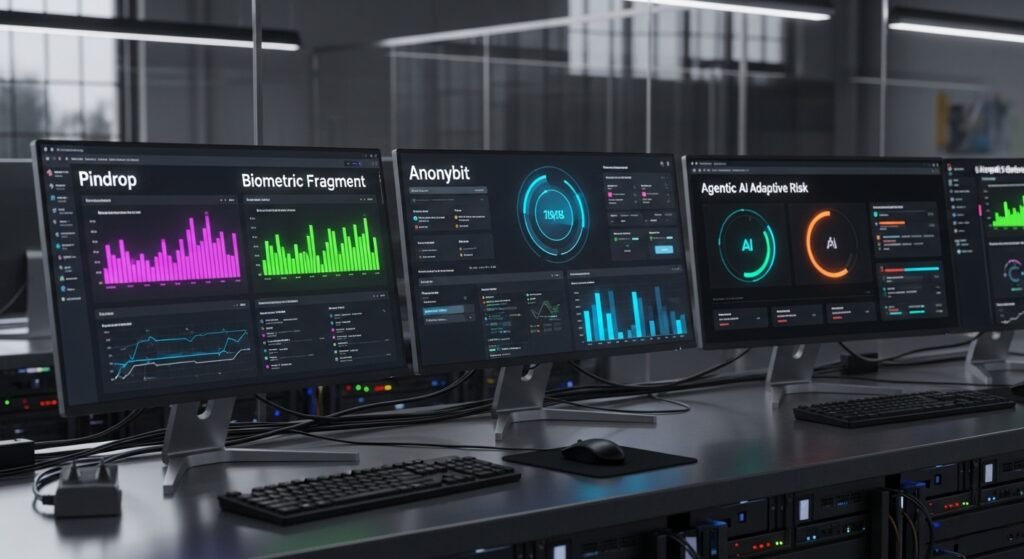
Agentic AI as an Active Defense Layer
In this system, Agentic AI acts as the coordinator. It evaluates context such as device, location, and behavior history. Based on risk, it can:
- Trigger stronger authentication
- Block sessions immediately
- Adjust security in real time
This turns security into a living, adaptive system rather than a checklist.
How Organizations Should Implement This Model
A phased approach works best:
- Assess risk and identify critical workflows
- Pilot the solution with limited users or channels
- Scale gradually while tuning risk thresholds
Common challenges include false positives, enrollment issues, and older systems. These can be managed with flexible authentication methods and cloud-friendly integrations.
Looking Ahead
As AI becomes more autonomous, identity will become the foundation of digital trust. Agentic systems can deliver massive value—but only if they are secure and accountable.
The future of cybersecurity lies in systems that verify who is acting, not just what credentials are used. By combining Agentic AI, voice liveness detection, and decentralized biometrics, organizations can stay secure in a world where machines sound and act like humans.
Conclusion
The biggest cybersecurity challenge of 2026 is trust. Deepfakes and autonomous fraud have blurred the line between humans and machines. Traditional defenses can no longer keep up.
The Triad Defense offers a clear path forward. It removes centralized risk, detects synthetic voices in real time, and binds AI actions to real people. In an age of intelligent machines, proving that we are human has become the most important security control of all.
Agentic AI Pindrop Anonybit is a cybersecurity framework combining autonomous AI (Agentic AI) with Pindrop’s voice liveness detection and Anonybit’s decentralized biometric protection to secure enterprises against deepfake and AI-driven fraud.
It prevents fraud by verifying the human identity behind every action. Agentic AI monitors workflows, Pindrop ensures live human voices, and Anonybit keeps biometric data decentralized and secure.
Agentic AI can act autonomously without step-by-step instructions, detecting threats, executing complex workflows, and identifying suspicious behavior in real time beyond the capabilities of traditional security systems.
Pindrop adds voice liveness detection, analyzing over 1,300 audio signals to distinguish real human voices from deepfake or synthetic audio in real time.
Anonybit fragments and distributes biometric data across multiple nodes, preventing centralized database breaches. It ensures that biometric templates can’t be reconstructed, maintaining privacy while validating identity.