
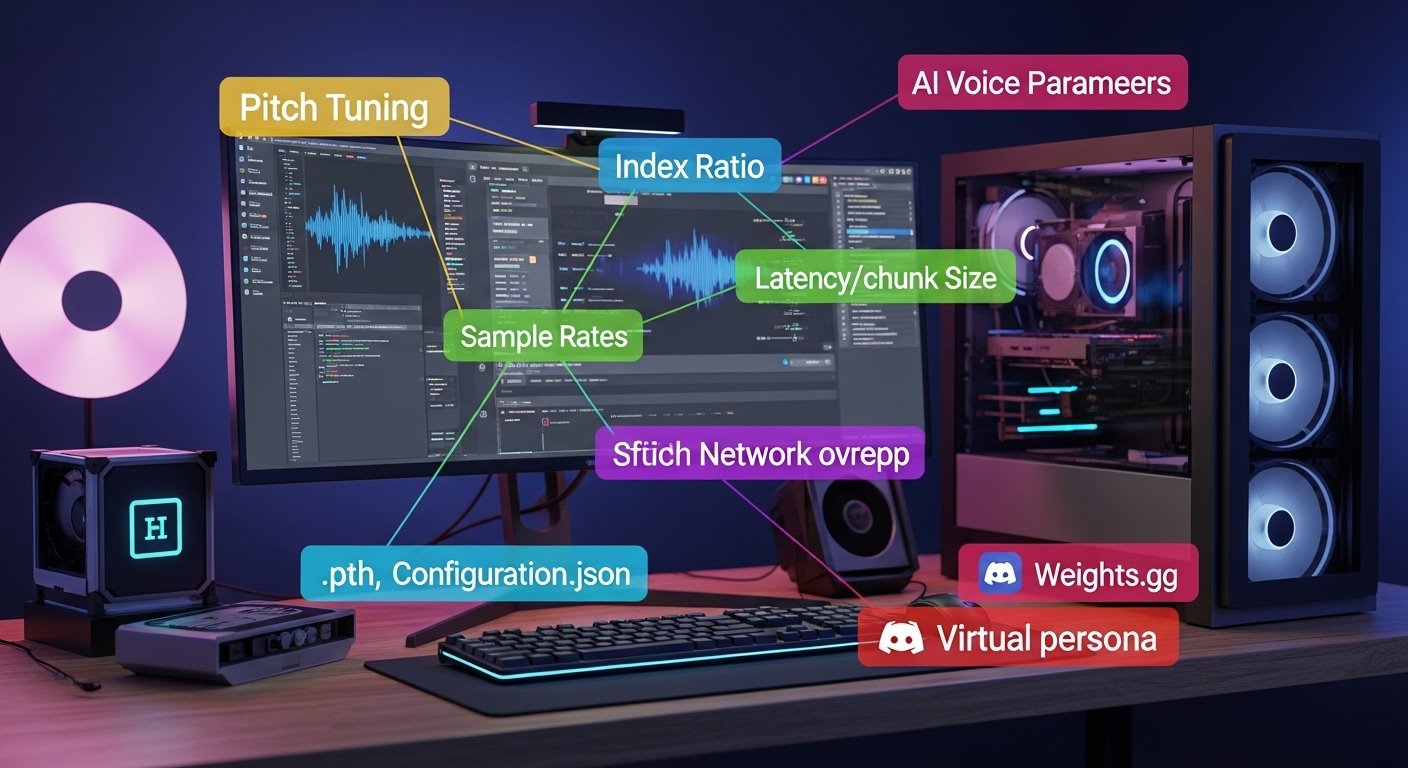
The intersection of classic animation and modern generative acoustics has fostered a burgeoning ecosystem dedicated to the preservation and reconstruction of iconic vocal performances. Within this landscape, the character of Perdita from Disney’s 1961 cinematic masterpiece, One Hundred and One Dalmatians, occupies a significant niche. Characterized by a refined, Mid-Atlantic elegance and a nurturing maternal warmth, Perdita’s voice represents a specific challenge and opportunity for practitioners of Retrieval-based Voice Conversion (RVC). The process of identifying, downloading, and implementing a high-fidelity Perdita voice model involves a multi-disciplinary approach that spans digital archaeology, computational linguistics, and ethical analysis.
The evolution of voice modeling technology has moved past the rigid constraints of traditional text-to-speech (TTS) toward neural synthesis frameworks that prioritize emotional nuance, timbre, and character-specific inflections. This report provides an exhaustive examination of the technical requirements and procedural frameworks necessary to acquire and utilize the Perdita AI voice model, drawing upon current repository data, community-driven technical standards, and institutional insights into generative media.
Technical Context: The Architecture of Voice Conversion
To effectively utilize a character-specific model such as Perdita, it is necessary to understand the underlying mechanics of Retrieval-based Voice Conversion (RVC). This technology represents a significant leap over concatenative synthesis, utilizing deep learning to map the features of a source voice onto a target vocal profile. RVC systems typically rely on a pre-trained encoder, such as HuBERT, which acts as a hidden-unit feature extractor to identify phonetic content without being influenced by the original speaker’s pitch or tone.
The Role of Model Weights and Feature Indices
The functional heart of a Perdita AI model is found in two primary file types: the model weights and the feature index. Model weights, typically stored in a .pth file, represent the learned parameters of the neural network following an extensive training period. These weights contain the textures and frequency characteristics that define Perdita’s voice. However, weights alone can sometimes produce generic or “robotic” outputs. To mitigate this, practitioners utilize an .index file, which serves as a retrieval database. During the inference process, the system queries the index for vocal features that closely match the input audio, thereby enhancing the realism and character-specific accuracy of the output.
| File Component | Extension | Primary Functionality | Required for Implementation |
| Model Weights | .pth | Neural network parameters and vocal timbre. | Yes |
| Feature Index | .index | High-fidelity retrieval database for nuance matching. | Highly Recommended |
| Configuration | .json | Architectural settings (sample rate, hop length). | Yes |
| Pre-trained G/D | .pth | Base files used for fine-tuning or training new models. | Optional (for training) |
The complexity of Perdita’s voice, which combines maternal softness with a clear, articulate delivery, requires these files to be trained on diverse datasets that capture varied emotional states. For instance, a model trained only on dialogue from the original 1961 film might lack the dynamic range needed for contemporary applications unless supplemented with audio from sequels like 101 Dalmatians II: Patch’s London Adventure.
Vocal Analysis and Sampling Standards
High-quality RVC models for characters like Perdita are typically trained at specific sample rates to ensure acoustic fidelity. Most community-standard models utilize 32k, 40k, or 48k sample rates. A 40k sample rate is often the preferred middle ground, offering a balance between file size and the preservation of the high-frequency “air” and clarity essential to a refined female voice.
The training process involves hundreds of “epochs,” or full passes through the dataset. If a model is under-trained (too few epochs), it may sound muffled or fail to capture the character’s unique cadence. Conversely, over-training can lead to a “metallic” distortion known as over-fitting, where the model mimics specific background noise from the training clips rather than the voice itself.
Sourcing the Perdita AI Voice Model: Repositories and Communities
The acquisition of character-specific AI models is largely governed by a decentralized network of enthusiasts and researchers. Because these models involve copyrighted intellectual property from major studios like Disney, they are rarely found on mainstream commercial marketplaces. Instead, they are distributed through open-source repositories and niche community hubs.
Primary Digital Hubs
- Hugging Face: As the preeminent repository for machine learning models, Hugging Face hosts several community-contributed “model packs” that include Disney characters. Researchers often look for users such as
RegalHyperusorniobures, who curate extensive libraries of RVC models. - Weights.gg: This platform serves as a specialized directory for character voices, offering preview clips that allow users to evaluate the quality of a model before downloading. It is a critical resource for identifying Perdita models that have been optimized for gaming or creative narration.
- Discord Communities (AI Hub): The most current and comprehensive sources for RVC models are often found within dedicated Discord servers such as “AI Hub” or its regional iterations like “AI Hub Brazil”. These servers maintain frequently updated spreadsheets and Mega/Google Drive links containing character weights that are not indexed by standard search engines.
| Platform | Access Method | Model Type | Content Nature |
| Hugging Face | Direct Repository | .pth,.index | Technical/Research-oriented |
| Weights.gg | Web Interface | Pre-viewable RVC | User-friendly/Gaming |
| AI Hub Discord | Community Invite | Direct Cloud Links | Comprehensive/Community-vetted |
| GitHub | Repository Search | Training Scripts/Models | Developer-centric |
Identification and Verification Strategy
When searching these platforms, the use of specific keywords is essential. Practitioners should search for “Perdita RVC,” “101 Dalmatians AI Voice,” or “Cate Bauer Voice Model” to isolate relevant files. Cate Bauer provided the original voice for Perdita in 1961, and models trained on her performance are generally considered the gold standard for historical accuracy. However, some models may utilize the voice of Kath Soucie from the 2003 sequel or the animated series, which may offer a slightly different tonal quality more suitable for high-energy or modern scripts.
Once a link is located, the downloaded archive (usually a .zip or .7z file) must be inspected. A complete download should contain the .pth weights file and an accompanying .index file. If the index is missing, the converted voice may lack the “character” of Perdita, sounding like a generic female voice with her approximate pitch but none of her specific vocal quirks.
Technical Execution: Hardware and Software Deployment
Deploying the Perdita voice model requires specialized software capable of performing real-time or batch vocal inference. The industry standards for this are Applio and W-Okada.
Hardware Infrastructure Requirements
Neural vocal synthesis is a GPU-intensive task. While basic inference can be run on a CPU, the results are often slow and lack the low-latency response needed for interactive applications.
| Component | Minimum Specification | Professional Recommendation |
| Processor (CPU) | Intel Core i5 / AMD Ryzen 5 | Intel Core i7 / AMD Ryzen 7+ |
| Graphics (GPU) | NVIDIA GTX 1060 (6GB VRAM) | NVIDIA RTX 3060+ (8GB+ VRAM) |
| System Memory (RAM) | 8 GB | 16 GB – 32 GB |
| Operating System | Windows 10 (64-bit) | Windows 11 or Linux (Ubuntu 22.04) |
| Storage | 5 GB (Base Software) | High-speed NVMe SSD |
For users with AMD GPUs or older hardware, specific patches like the “ZLUDA” framework are required to enable CUDA-like performance on non-NVIDIA systems. Without a compatible GPU, the time to convert a single sentence can jump from milliseconds to several seconds, making real-time communication impossible.
Software Installation and Environment Setup
The installation of Applio or W-Okada involves setting up a Python-based environment. Practitioners are advised to use Python versions 3.10.12 or 3.11.x to ensure compatibility with the deep learning libraries like PyTorch and TensorFlow.
- Applio Deployment: To install Applio, the user must clone the repository from GitHub and execute the
run-install.batfile (for Windows) orrun-install.sh(for Linux/macOS). This script automates the installation of necessary dependencies. Once installed, therun-applio.batscript launches a Gradio-based interface in the user’s web browser. - W-Okada Deployment: This client is optimized for real-time voice changing during live calls or gaming. It requires the installation of a Virtual Audio Cable (VAC), such as the VB-Cable from VB-Audio. This software routes the audio from the W-Okada client to applications like Discord or Zoom, allowing the transformed voice to be transmitted as a microphone input.

Refinement of the Perdita Persona: Parameter Tuning
Achieving a convincing Perdita performance necessitates careful adjustment of the inference settings. A common mistake among novice users is to assume that the model will automatically sound like the character regardless of the input voice. In reality, the AI requires the user to provide a “foundation” that it can then skin with Perdita’s vocal textures.
Critical Inference Settings
- Pitch Shifting (TUNE): This parameter adjusts the frequency of the input audio to match the target’s range. For a male user attempting to sound like Perdita, a pitch shift of +12 (one full octave) is typically required. Female users may find that a shift of 0 or +2 is sufficient.
- Pitch Extraction Algorithms: The choice of algorithm significantly impacts the stability of the voice.
RMVPE(Robust MVPE) is currently the industry favorite for its ability to handle varied input quality while maintaining high-fidelity output.Crepeis an alternative that provides high precision but requires more GPU power. - Index Ratio: This setting determines how much of the character’s specific “features” from the training data are blended into the output. A ratio that is too high can cause a “robotic” or “choppy” sound if the input audio differs too much from the training data. A ratio of 0.3 to 0.7 is generally recommended for character voices like Perdita to ensure a natural flow.
- Voiceless Consonant Protection: Enabling this feature prevents the AI from attempting to “voice” non-vocal sounds like the ‘s’ in “puppies” or the ‘p’ in “Pongo.” Protecting these consonants ensures that Perdita’s speech remains articulate and clear, which is a hallmark of her refined character.
Managing Latency and Quality
In real-time environments, practitioners must balance quality with speed. The “Chunk” size determines how much audio the AI processes at once. A smaller chunk size (e.g., 64 or 128) reduces the delay between the user speaking and the transformed voice being heard but increases the risk of audio “glitches” or “stuttering” if the CPU/GPU cannot keep up. The “Extra” data length allows the model to look at the previous several milliseconds of audio to better predict the current tone, improving accuracy at the cost of higher processing requirements.
Institutional Reports: The Cultural and Commercial Landscape
The interest in Perdita’s voice model is not an isolated phenomenon but part of a broader trend in “Generative Nostalgia” and the digitization of classic media. Institutional analysis of AI voice usage suggests several key trends that influence the development and availability of these models.
The Rise of Virtual Personas
Platforms like Oreate AI have noted that the recreation of nurturing, elegant characters like Perdita serves a growing demand for virtual personas that feel “personable” rather than “mechanical”. This has significant implications for sectors such as healthcare and education. In healthcare settings, for example, the use of a comforting, recognizable voice to deliver appointment reminders or medication instructions has been shown to alleviate patient anxiety. The “warmth” of the Perdita model makes it an ideal candidate for such applications, where the goal is to create a “human-like” presence that fosters connection.
Gaming and Interactive Storytelling
In the gaming sector, the emergence of real-time AI voice technology is described as “revolutionary”. At platforms like Weights.gg, AI voices are used to transform solitary gaming experiences into collaborative adventures. Players use character models like Perdita to role-play in immersive environments, using the voice to guide teammates through critical moments or to create unique fan-made content. This usage pattern underscores the shift from passive consumption of Disney media to active, participatory engagement where the audience “becomes” the character.
| Sector | Primary Application of AI Voice | Impact on User Experience |
| Education | Narrating bedtime stories/Historical papers. | Enhanced engagement and comprehension. |
| Gaming | Real-time role-play/Character guides. | Immersive, personalized gameplay. |
| Healthcare | Automated reminders and triage bots. | Reduced anxiety through empathetic tone. |
| Content Creation | YouTube covers and fan-fiction narration. | Preservation of character legacy in new media. |
Legal and Ethical Frameworks: The Disney Precedent
The use of AI to replicate voices from a Disney production brings forth a complex array of legal and ethical considerations. While the technical ability to download and use the Perdita model is readily available, the legal right to do so is far from settled.
Copyright and the Right of Publicity
The legal debate surrounding AI voices is split between two distinct areas: property rights (copyright) and personal rights (right of publicity).
- Copyright: Traditional copyright protects the actual audio recordings from the 101 Dalmatians films. Using these recordings to train an AI is a “murky” legal territory currently being litigated in various jurisdictions. Furthermore, the U.S. Copyright Office has stated that raw AI-generated audio cannot be copyrighted because it lacks a “human author”.
- Right of Publicity: This is the more immediate risk for creators. It protects the “vocal identity” of an individual. Even if a user doesn’t use a specific recording from the movie, if the AI sounds exactly like a recognizable person (or their characterization), they may be violating the “right of personality”. In the case of Perdita, Disney likely holds the rights to the character’s voice as part of their broader intellectual property.
The “Soundalike” Ethical Standard
A common comparison in the industry is the case of “Woody” from Toy Story. Legal experts suggest that using an AI model trained on Tom Hanks without permission is both “illegal and unethical”. The recommended “ethical” route is to hire a “soundalike” performer who can capture the essence of the character without directly cloning a copyrighted voice. However, for many fan projects, the “Perdita RVC model” is used precisely because it offers a level of fidelity that a soundalike performer cannot reach.
Practitioners are warned that Disney is historically aggressive in protecting its intellectual property. While personal, non-commercial use of a Perdita model is unlikely to trigger a lawsuit, any project that seeks to monetize the output or use it in a high-profile public campaign runs a significant risk of receiving a cease-and-desist or facing direct legal action.
Troubleshooting and Quality Assurance
Even with high-quality weights and optimal settings, the conversion process can encounter issues. Common problems include robotic artifacts, latency delays, and “pitch leakage.”
Common Technical Issues and Solutions
- Robotic or Distorted Output: This is often caused by an over-trained model or a mismatch between the input audio and the feature index. Users should try lowering the “Index Ratio” (e.g., to 0.3) or changing the pitch extraction algorithm to
RMVPE. - High Latency in Real-Time: If there is a noticeable delay between speaking and the output, the “Chunk Size” should be reduced. However, this may require more CPU/GPU resources. Using an ASIO driver or high-speed hardware is the most effective long-term solution.
- No Audio Output in Discord: This usually indicates a routing error with the Virtual Audio Cable. The user must verify that the W-Okada output is set to “CABLE Input” and the Discord input is set to “CABLE Output”. Additionally, Discord’s internal “Echo Cancellation” and “Noise Suppression” features should be disabled, as they can conflict with the AI-processed signal and cause the audio to cut out.
Dataset Curation for Custom Models
For those who find the available Perdita models lacking, the process of creating a bespoke model involves rigorous dataset curation. The goal is to gather 15 to 30 minutes of “pure” audio—no background music, no sound effects, and no other characters talking. Tools like Ultimate Vocal Remover (UVR5) are essential for this task, as they can separate dialogue from a movie’s soundtrack with high precision. A dataset that includes a wide range of emotions—from Perdita’s quiet comforting of Pongo to her energetic response to the “Twilight Bark”—will result in a significantly more versatile and realistic model.
Future Outlook: The Evolution of Character Voices
The trajectory of AI voice technology suggests that models like Perdita’s will become increasingly integrated into the “metaverse” and augmented reality. The current state of RVC is merely the beginning of a move toward “digital replicas” that can maintain a consistent character identity across multiple languages and platforms.
Multilingual Localization
One of the most promising aspects of RVC technology is its ability to perform “speech-to-speech” conversion across different languages. A user can speak their native language (e.g., Spanish or Japanese), and the voice changer can output the result in Perdita’s voice while maintaining the character’s specific tone. This allows for a globalized version of Disney’s history, where classic characters can communicate with audiences regardless of linguistic barriers.
Preserving Cinematic Legacies
As the original voice actors of the golden age of animation pass away, AI models provide a way to “freeze” their performances in time. This is not without controversy, as it raises questions about the “authenticity” of an AI-generated performance versus a human one. However, for future generations, experiencing 101 Dalmatians through virtual reality adaptations featuring lifelike renditions of Perdita may become the standard way to engage with the story.
Conclusion
The successful acquisition and deployment of the 101 Dalmatians Perdita AI voice model is a sophisticated process that leverages the forefront of neural network research and community-driven innovation. By sourcing high-fidelity RVC weights from repositories like Hugging Face or specialized Discord servers and deploying them through robust engines like Applio or W-Okada, practitioners can recreate the refined and nurturing vocal identity of one of Disney’s most beloved characters.
However, the pursuit of this technology requires a dual awareness: a technical mastery of parameters like pitch extraction and index ratios, and an ethical respect for the intellectual property of the original creators. As AI continues to bridge the gap between historical media and interactive experiences, the Perdita model serves as a prime example of how technology can preserve, transform, and extend the legacy of cinematic artistry. For professional creators and enthusiasts alike, the Perdita AI voice model offers a powerful tool for narration, role-play, and creative exploration, provided it is deployed with technical precision and legal caution.
FAQ’s
The Perdita AI voice model is a neural network-based voice synthesis tool that recreates the voice of Perdita from Disney’s 1961 film 101 Dalmatians. It uses Retrieval-based Voice Conversion (RVC) to replicate her maternal tone, Mid-Atlantic elegance, and vocal nuances.
You can find Perdita AI models through community-driven platforms like Hugging Face, Weights.gg, and dedicated AI Hub Discord servers. Search for terms like “Perdita RVC,” “101 Dalmatians AI Voice,” or “Cate Bauer Voice Model.” Make sure your download includes the .pth weights file and the .index file for best results.
Model Weights (.pth): Neural network parameters for voice timbre (required).
Feature Index (.index): Retrieval database for high-fidelity nuance matching (highly recommended).
Configuration (.json): Settings for sample rate, hop length, etc. (required).
Pre-trained G/D (.pth): Optional base files for fine-tuning or custom training.
Popular engines include Applio and W-Okada, both of which provide real-time and batch voice conversion capabilities. W-Okada is optimized for live applications, while Applio is more research- and content-focused.
CPU: Intel i5/Ryzen 5 minimum, Intel i7/Ryzen 7 recommended.
GPU: NVIDIA GTX 1060 minimum, RTX 3060+ recommended (8GB+ VRAM).
RAM: 8 GB minimum, 16–32 GB recommended.
Storage: High-speed SSD preferred.
Perdita’s voice is copyrighted by Disney. Using the AI model for personal, non-commercial purposes is generally safer, but monetizing the output or publishing it publicly can lead to copyright or right-of-publicity violations. Hiring a soundalike performer is the safest “ethical” alternative.
Adjust pitch shift depending on your input voice.
Use RMVPE for pitch extraction for stable and high-fidelity results.
Tune the index ratio between 0.3–0.7 to balance character features and natural flow.
Enable voiceless consonant protection to maintain clarity in speech.
Manage chunk size and extra data length to balance latency and audio quality.
Yes, by curating 15–30 minutes of high-quality, isolated audio clips of Perdita. Tools like Ultimate Vocal Remover (UVR5) help extract clean dialogue. Training on diverse emotional expressions ensures a versatile and realistic model.
Yes. Modern RVC frameworks support speech-to-speech conversion, allowing input in one language to be output in Perdita’s voice while preserving her tonal characteristics.
Robotic or distorted output: Lower index ratio or switch pitch extraction algorithm.
High latency: Reduce chunk size or upgrade CPU/GPU.
No audio in Discord: Verify virtual audio routing and disable Discord’s echo/noise suppression.